Auf dem Weg zu einer Kultur der Kooperation
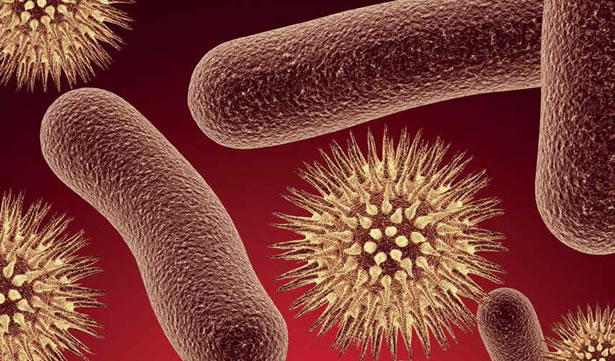
Zeigen sich in der biologischen Evolution Muster, die uns bei der Bewältigung der globalen Krisen helfen können? Die Evolutionsbiologin Elisabet Sahtouris ist überzeugt davon und geht noch einen Schritt weiter: Vielleicht sind diese Herausforderungen genau das, was wir brauchen, um als Menschheit in unserer Entwicklung einen Schritt weiterzugehen.
Von Elisabet Sahtouris
Die Menschheit entwickelt sich, wie alle anderen Lebensformen auf der Erde vor und mit uns. Evolution verläuft für den Menschen wie für alle anderen Arten weder vorhersehbar linear noch ausschließlich darwinistisch. In den fast vier Milliarden Jahren evolutionärer Erfahrung der Erde zeigen sich wiederkehrende Muster, die uns Hoffnung, Inspiration und wertvolle Einsichten geben können inmitten des nie dagewesenen Zusammenfließens dramatischer Krisen, in denen wir Menschen uns recht plötzlich wiederfinden.
Read More →
 from Suzanne Murray
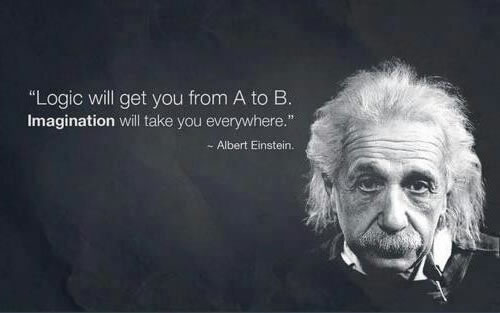
Imagination is more important than knowledge.
“ Albert Einstein
Our calling is where our deepest gladness meets the world‘s hunger.
“ Frederick Buecher
Consider that your imagination is real. It is a creative force. Our bodies can‘t tell the difference between an actual event and one that is imagined. If you have a fear of heights and lean out over the railing to look down on the Grand Canyon your body will begin to feel a sense of panic, dizziness and butterflies in the stomach. Close your eyes and imagine the same scene in detail and you will feel the same visceral reaction to a fear of falling.
Consider that as the prophecies suggest with the start of 2013 we have entered a “New Age“, the age of Aquarius, and we have an opportunity to create a world of peace and harmony that works for everyone. “Just pretend“ that it is possible. “Just pretend“ is another way of saying“ imagine“, because when we use our imagination we feel we are just making it up and that it has little to do with “what is real“. But what if imagination is more than that. What if through the force of imagination we can be the creator of our lives and our world. What if now is the time. What do you want to create for yourself, your community and the world at large. You can start with “just pretend“ to begin to access your imagination and deeper knowing.
Perception underpins all human behavior and helps interpret sensory information to make sense from the senseless. The brain, to create meaning where there is possibly none, processes perception from the unperceived and thought from the unthinkable. The process of perception is in fact one of creation. What we perceive is not what is out there or within. There is no inherent value in the incredibly complex patterns of light that fall onto our eyes, and yet we see coherent forms and motions that enable us to survive. Exploring the nature of perception can help us glimpse life beyond experiencer and experience, perceiver and perception.
Read More →
von Tom Steininger
 TOM STEININGER: Seit der Aufklärung hat der Siegeszug der Wissenschaft dazu geführt, dass wir unseren Blick vor allem auf die äußere Dimension des Sichtbaren und Messbaren gerichtet haben. Im Laufe der Jahrhunderte gab es viele Gegenbewegungen, die den Wert des Innerlichen hervorhoben “ von der Romantik bis zur modernen Psychologie und vielen spirituellen Strömungen. Es scheint heute, dass eine neue Synthese des Äußeren und Inneren möglich und notwendig ist, um unseren Weg als Menschheit des 21. Jahrhunderts zu gehen. Diese Integration ist ein Kernstück Ihrer Arbeit. Als Systemtheoretiker beschäftigen Sie sich schon seit Langem mit der Frage, wie die wissenschaftlichen Erkenntnisse der Systemtheorie und anderer Disziplinen mit der Tiefendimension der Wirklichkeit, die wir vielleicht als Bewusstsein bezeichnen können, zusammenhängen. Worum geht es Ihnen dabei?
ERVIN LASZLO: Ein System ist für mich eine Einheit, die in der Natur erscheint und sich weiterentwickelt. Diese Entwicklung vollzieht sich in einer Abfolge mit immer größeren Ebenen der Komplexität: Teilchen, Atome, Kohlenstoffverbindungen, Organismen, Biotope, ganze Biosphären, Galaxien und so weiter. Das sind alles zusammengesetzte, komplexe Systeme, die in der Natur erscheinen.
Mich interessieren hauptsächlich natürliche Systeme, die in der Natur entstehen und sich entwickeln, also einen evolutionären Prozess durchlaufen. Diese Systeme können wir nicht rein mechanistisch erfassen, denn das wäre nur dann möglich, wenn wir die ganze Welt lediglich als einen Mechanismus begreifen. Aber es gibt Phänomene, die zeigen, dass sich viele Systeme untereinander verständigen, dass sie Informationen verarbeiten können. Diese Systeme haben nicht nur eine rein materielle, physikalische Perspektive. Sie haben auch Aspekte wie Wahrnehmung.
Für mich haben alle Systeme beide Aspekte.
Von außen betrachtet sind es nur physikalische, biologische, biochemische oder biophysische Systeme. Wenn wir beispielsweise das Bewusstsein des Menschen untersuchen, erkennen wir von außen betrachtet nur Neuronen, die im Gehirn aktiv sind. Von außen betrachtet ist jeder Mensch also ein physikalisch-biologisches System.
Aber von innen betrachtet sind unsere mentalen Vorstellungen keine materiellen Phänomene. Sie erscheinen im Bewusstsein. Ich nehme an, dass ich ein Bewusstsein habe, aber ich nehme gleichzeitig an, dass auch Sie ein Bewusstsein haben und dass jeder Mensch ein Bewusstsein hat. Ich kann Bewusstsein aber nicht nur auf den Menschen beschränken. Was ist mit meinem Hund? Oder der Pflanze in meinem Garten? Oder mit der ganzen Biosphäre? Überall, wo es ein System gibt, muss auch eine bewusstseinsartige Perspektive vorhanden sein.
Die beste und einfachste Vorstellung über die Welt, die mit wenig Spekulation auskommt, ist, dass der ganze Kosmos ein psycho-physisches System ist. Von außen betrachtet ist es ein physikalisches System, von innen betrachtet hat jedes System, jedes Atom, jede Biosphäre auch diesen inneren Bewusstseinsaspekt.
Dieser Bewusstseinsaspekt artikuliert sich, wird immer komplexer und bildet immer größere Einheiten, zugleich wird das System selbst immer komplexer. Bei lebenden Systemen mit einem Nervensystem, bei komplexen Systemen wie dem Gehirn ist auch das Bewusstsein komplexer. Beides, Komplexität der Systeme und Bewusstsein, entwickelt sich zusammen.
by Carter Phipps (German translation see below)
 As I was researching my book, Evolutionaries, I made an interesting observation: This is not a world built for generalists. It is a world built for specialists. What‘s valued intellectually is specialty knowledge“”expertise on the mechanics of eukaryotic cells or the chemistry of black holes or the life cycles of ant colonies. Even within individual disciplines, the drumbeat of specialization takes precedence over broader systems of knowledge. It‘s not enough to be a physicist; one is a particle physicist or a quantum loop theorist or a string theorist. It‘s not enough to be an historian; one is an expert on Renaissance social customs or South Asian political dynamics in the eighteenth century. Indeed, the degree of specialization in our collective knowledge base is both stunning in its depth and detail and frightening in its increasing fragmentation.
“Most educated people at the beginning of the twenty-first century consider themselves to be specialists.“ Writes Craig Eisendrath. “Yet what is needed for the task of understanding our culture‘s evolution, and of framing a new cultural paradigm, is the generalist‘s capacity to look at culture‘s many dimensions and to put together ideas from disparate sources.“
The people I have come to call “Evolutionaries“ are generalists for this very reason. Their critical insights are a result of thinking as a generalist must think“”with a passionate but broad curiosity that fans out across culture and sees connections, patterns, transitions, and trends where others only see discrete facts and details. An Evolutionary must be able to look at the movements of nature, culture, and cosmos as a whole, yet without denying the infinite detail that surrounds us.