
Light at the edge
Oneness is a fundamental, creative force present in all life, empowered when individual consciousness recognizes and aligns with it.
When we experience oneness, we feel in the gut and in the heart that we are part of something beyond ourselves, that there is harmony and meaning in life, and that every human being and every aspect of existence is uniquely valuable. We live oneness through respect, compassion, cooperation, and creativity, which naturally support the most fundamental needs of life.
For centuries, oneness has been described as a spiritual experience and principle. In Taoism, oneness is the Tao, „the way“ of life, which, like nature, has its own rhythms and patterns. Mahayana Buddhism trains its disciples to awaken from a solid, individual „self“ into an infinite, intelligent oneness that is empty and compassionate. And in the New Testament, the letter of St. Paul to the Ephesians describes „…one God and Father of all, who is over all and through all and in you all.“
Oneness as a spiritual ideal can seem daunting „as though we can only experience it after great effort. But oneness is not special „it’s special that we don’t live it more often. When we curb our natural response to help those in need, when we impose our will on nature instead of discovering how to work with it, when we choose to „get ahead“ instead of finding meaning and dignity in our work „we undermine the natural, relational, and unifying power of oneness.
Most of us live oneness without even knowing it „in our private and family lives where we naturally seek and value empathy, care, love, and unity. But these same experiences, which create the foundations of our most important relationships, can also play a role in building the future structures of our global community.
 von Sabrina Gundert
Den ganz eigenen Weg zu gehen und damit dem zu folgen, was uns im Herzen brennt, das wünschen wir uns oft. Dennoch stecken wir häufig in Berufen und Lebensumständen fest, die uns keine Freude bereiten. Mit der passenden Vorbereitung können wir jedoch einfach losgehen und voller Freude den ersten Schritt wagen.
Wer schon einmal die tiefe Sehnsucht im Herzen gespürt hat, weiß, dass sie sich nicht so einfach verdrängen lässt. Es ist eine Sehnsucht danach, wirklich authentisch zu leben, eigene Talente und Potenziale zu verwirklichen und das zu tun, was dem eigenen Leben einen Sinn gibt. Oft führt sie zu inneren Krisen und ruft Umbruchszeiten hervor oder tritt in eben diesen auf. Dann scheint der Schritt zum Jobwechsel, zum Umzug, zur Trennung plötzlich unausweichlich.
Solch ein Moment des inneren Erkennens ruft erst einmal Angst hervor, denn er gleicht einer Stunde Null. Plötzlich steht kein Stein mehr auf dem anderen und das wohlgeordnete, sicher geglaubte Lebensgerüst beginnt gefährlich zu schwanken. Fragen tauchen auf und rotieren Tag und Nacht im Geist: Kann ich einfach so kündigen? Was soll ich dann tun? Was werden die anderen sagen?
Schwimmen gegen den Strom
So stark der Wunsch nach einem aufrichtigen, echten und authentischen Leben meist auch ist, so vermitteln Familie und Gesellschaft oft das genau gegenteilige Bild: In diesem geht es darum einen guten Job zu finden, viel Geld zu verdienen, Sicherheiten zu schaffen, aufzusteigen. In einer Gesellschaft, die auf Leistung ausgerichtet ist, gleicht das Gehen des eigenen Lebensweges oftmals einem Schwimmen gegen den Strom. Wer mit dem Gedanken spielt, wirklich dem Eigenen zu folgen, trifft schnell auf Hürden im Außen. Wie kannst du nur, rufen die einen. Das wird bestimmt schief gehen, die anderen. Unterstützung und Ermutigung vermitteln meist nur die Menschen, die einen ähnlichen Weg gegangen sind und gehen und somit wissen, welche Steine und Hindernisse dieser mit sich bringt. Doch es ist nicht unmöglich, den eigenen Weg zu gehen. Vielmehr bleibt es Utopie, weil wir es nicht wagen, einfach loszugehen.
 from Suzanne Murray
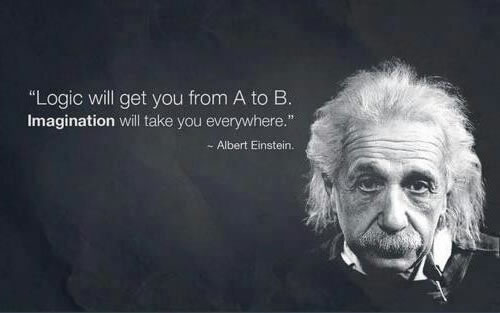
Imagination is more important than knowledge.
“ Albert Einstein
Our calling is where our deepest gladness meets the world‘s hunger.
“ Frederick Buecher
Consider that your imagination is real. It is a creative force. Our bodies can‘t tell the difference between an actual event and one that is imagined. If you have a fear of heights and lean out over the railing to look down on the Grand Canyon your body will begin to feel a sense of panic, dizziness and butterflies in the stomach. Close your eyes and imagine the same scene in detail and you will feel the same visceral reaction to a fear of falling.
Consider that as the prophecies suggest with the start of 2013 we have entered a “New Age“, the age of Aquarius, and we have an opportunity to create a world of peace and harmony that works for everyone. “Just pretend“ that it is possible. “Just pretend“ is another way of saying“ imagine“, because when we use our imagination we feel we are just making it up and that it has little to do with “what is real“. But what if imagination is more than that. What if through the force of imagination we can be the creator of our lives and our world. What if now is the time. What do you want to create for yourself, your community and the world at large. You can start with “just pretend“ to begin to access your imagination and deeper knowing.
Perception underpins all human behavior and helps interpret sensory information to make sense from the senseless. The brain, to create meaning where there is possibly none, processes perception from the unperceived and thought from the unthinkable. The process of perception is in fact one of creation. What we perceive is not what is out there or within. There is no inherent value in the incredibly complex patterns of light that fall onto our eyes, and yet we see coherent forms and motions that enable us to survive. Exploring the nature of perception can help us glimpse life beyond experiencer and experience, perceiver and perception.
Read More →

von Martin Frischknecht
Beim Surfen in Facebook stoße ich auf das Bild einer mir bekannten Frau. Als ich mit dem Mauszeiger zum Bild fahre, gerate ich in die Nähe des nach oben erhobenen Daumens. Unverlangt springt ein kleines gelbes Hilfe-Fenster auf, das mich über die Funktion informiert: „Dieses Objekt gefällt mir“. Obwohl ich diese Formulierung etwas überraschend finde, kann ich nicht umhin, der Aussage zuzustimmen. Also drücke ich auf die Hand mit dem nach oben weisenden Daumen. Worauf die halbe Welt Kenntnis nehmen kann von dem, was ich seit gut drei Jahrzehnten weiß: Ich mag sie. Schließlich war sie mal meine Freundin.
Mein Objekt? Ich zögere. Das gehört sich nicht. Ein Mensch ist kein Objekt. Selbst wenn man ihn zum Fressen gern hat, ist sie oder er das nicht. Obwohl das Sich verlieben gerade so funktioniert: Ein anderer Mensch wird zum Objekt der Begierde; man möchte Tag und Nacht bei ihm sein, weil dessen Gegenwart einen so wunderbar zuverlässig mit überaus angenehmen Gefühlen versorgt. Wie auf Knopfdruck schießen die Glückshormone ein, und man fühlt sich gut. Alles dank diesem einen Menschen, dem Objekt der Verehrung, der Hoffnung, der Liebe.
Read More →